Learn to Steward
Learn how to manage money wisely, prepare for the future, and honor God with what you have.
We have a goal of reaching 1,000,000 students at no cost to them by the end of 2027, will you help us achieve it?
Books funded:
12,515 / 1,000,000

2026
TIYL Financial equips young leaders to manage earthly resources with wisdom, active preparation, and open-handed generosity so that they may faithfully honor God with their portion and serve His Kingdom.
The L.Y.T. Framework
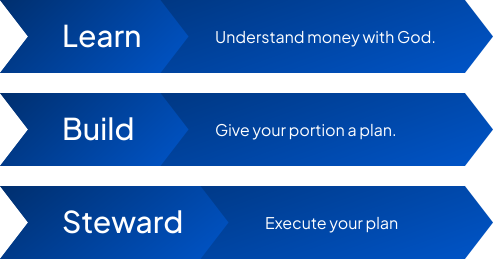
The L.Y.T. Framework (Laying Your TIYLs) is a Christian Financial Stewardship model developed to equip early journey stewards with the information to understand and walk out being fruitful, multiplying, and having dominion over their portions using the perfect Word of God.
For students, parents, leaders, and small groups who want a practical guide to Christian financial stewardship.
80 Days · Semester-Long
A plug-n-play program that comes with:
Built for the Next Generation

Build a strong financial foundation with God.

Steward your flock and give the next generation a better place to start.

Add to or replace your existing financial curriculum with Kingdom-focused stewardship education.

The L.Y.T. Framework
Tool 01
Inputs
Total 100.00 %
Your take-home plan
Estimated net pay
$0.00
Estimates for planning only, based on single-filer standard deductions. Not tax advice.
Inputs
Your growth projection
Portfolio balance by year
Principal Growth
Estimates for planning only. Returns are compounded at the selected rate and are not guaranteed.
After a career in commercial banking, Elijah J. Mason saw how important financial stewardship in the Kingdom is, and how little of his peers knew anything about it.
He created TIYL Financial to help the next generation learn how to manage their financial portion.
Rates apply to taxable income, by filing status. Each rate applies only to the income within its range.
| Rate | Single | Married Filing Jointly | Head of Household | Married Filing Separately |
|---|---|---|---|---|
| 10% | Up to $12,400 | Up to $24,800 | Up to $17,700 | Up to $12,400 |
| 12% | $12,400 – $50,400 | $24,800 – $100,800 | $17,700 – $67,450 | $12,400 – $50,400 |
| 22% | $50,400 – $105,700 | $100,800 – $211,400 | $67,450 – $105,700 | $50,400 – $105,700 |
| 24% | $105,700 – $201,775 | $211,400 – $403,550 | $105,700 – $201,750 | $105,700 – $201,775 |
| 32% | $201,775 – $256,225 | $403,550 – $512,450 | $201,750 – $256,200 | $201,775 – $256,225 |
| 35% | $256,225 – $640,600 | $512,450 – $768,700 | $256,200 – $640,600 | $256,225 – $384,350 |
| 37% | Over $640,600 | Over $768,700 | Over $640,600 | Over $384,350 |
| Std. deduction | $16,100 | $32,200 | $24,150 | $16,100 |
Source: IRS Rev. Proc. 2025-32. Applies to income earned in 2026 (returns filed in 2027). For general information only; not tax advice.